

Trusted Rheumatoid Arthritis Specialists Accepting New Patients in Rosedale, MD
If you’re seeking care for rheumatoid arthritis, Dr. Nasseri and his team in Rosedale, MD, are here to help. We’re accepting new patients and offer customized treatment plans designed to manage symptoms such as joint pain, swelling, stiffness, and fatigue, improving your overall quality of life. Let us support you in your journey to better joint health. For more information, contact us or request an appointment online. We are located at 9114 Philadelphia Rd, Ste 208, Rosedale, MD 21237.
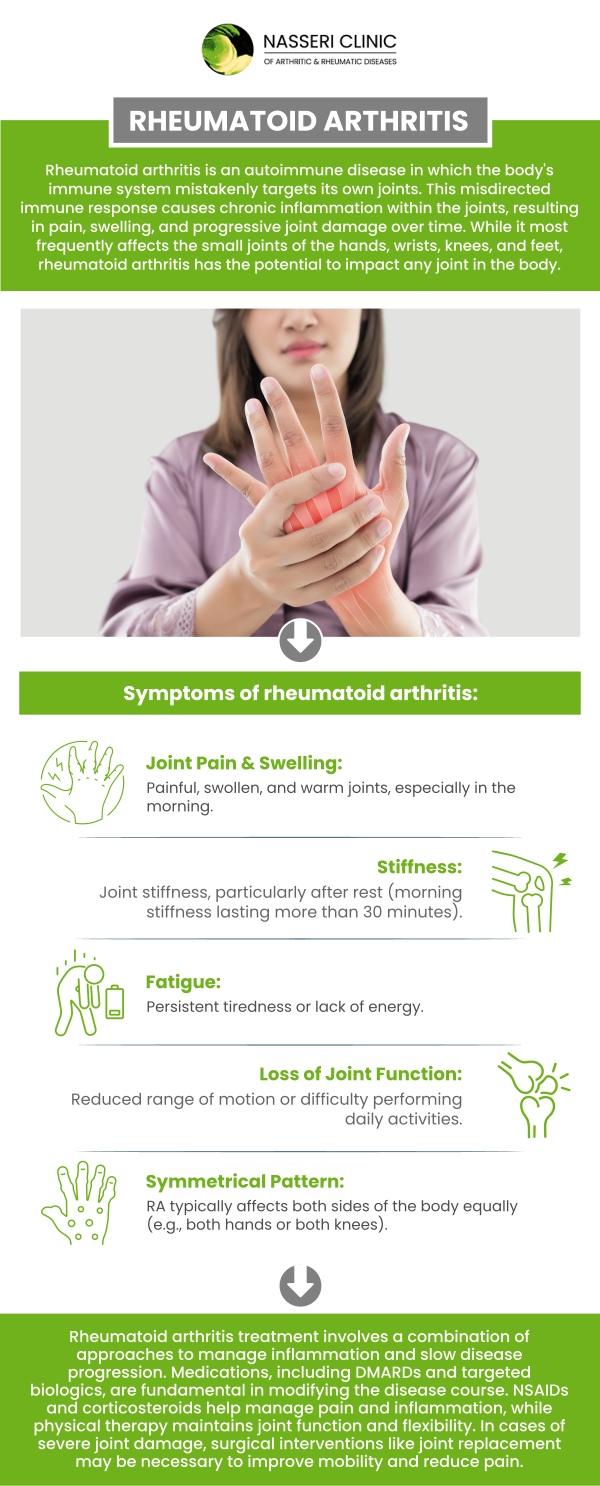
Table of Contents:
How can I find trusted rheumatoid arthritis specialists who are currently accepting new patients?
How often should I follow up with my healthcare provider in Rosedale, MD, for ongoing care?
Can a rheumatoid arthritis specialist help with both diagnosis and long‑term treatment planning?
How soon can I typically get an appointment with a rheumatoid arthritis specialist accepting new patients?
Start Your Journey to Rheumatoid Arthritis Relief with Dr. Nasser Nasseri, MD, Accepting New Patients
Finding a specialist—specifically a rheumatologist—requires looking beyond a simple web search. To find a trusted provider in Rosedale, start by verifying board certifications through the American Board of Internal Medicine (ABIM) with a subspecialty in Rheumatology. Online patient reviews on platforms like Healthgrades or Google can provide insight into a provider’s bedside manner and office efficiency.
Another reliable method is to check with your primary care physician for a referral, as they often have established professional networks with local specialists. Additionally, checking your insurance provider’s “Find a Doctor” portal ensures the specialist is within your network, preventing unexpected costs. At Nasseri Clinic, we strive to make this process seamless by maintaining an open-door policy for new patients seeking specialized RA intervention in the North Baltimore and Rosedale communities.
The frequency of follow-up appointments for Rheumatoid Arthritis is not “one size fits all”; it depends heavily on the activity level of your disease. When you are first diagnosed or if you are currently experiencing a flare-up, you may need to see your specialist every 4 to 8 weeks. These frequent visits allow the doctor to monitor your response to medications and adjust dosages to achieve “remission”—the state where joint inflammation is minimal to non-existent.
Once your symptoms are stable and your RA is well-controlled, follow-up intervals typically extend to every 3 to 6 months. During these visits, your provider will perform physical exams, order routine blood work (to check for inflammatory markers and monitor organ function while on medication), and potentially use imaging to ensure no “silent” joint damage is occurring. Consistent follow-up is the most effective way to prevent long-term disability.
Absolutely. In fact, a rheumatologist is the most qualified professional to handle both ends of the spectrum. Diagnosis is often the most difficult stage, as RA symptoms can mimic other conditions like lupus or osteoarthritis. A specialist uses a combination of clinical exams, specialized blood panels (checking for Rheumatoid Factor and Anti-CCP antibodies), and high-resolution imaging to confirm the diagnosis early.
Long-term planning is where the specialist’s expertise truly shines. RA is a progressive disease, meaning the treatment you need today may differ from what you need in five years. Your specialist manages your “treatment ladder,” which may start with traditional DMARDs (Disease-Modifying Antirheumatic Drugs) and progress to advanced biologics if necessary. They also coordinate multi-disciplinary care, incorporating physical therapy and lifestyle modifications into a cohesive, long-term strategy for joint preservation.
Wait times for specialists can vary significantly based on the region and the urgency of the case. Nationally, it is not uncommon for new patient appointments with rheumatologists to take several weeks or even months. However, many clinics in the Rosedale area, including Nasseri Clinic, prioritize “acute” cases where a patient is experiencing significant functional loss or intense pain.
To speed up the process, it is helpful to have your medical records and recent lab results sent over prior to calling. Being flexible with your schedule—such as being available for mid-morning or mid-afternoon slots—can often get you on the calendar sooner. We recommend calling our office directly to discuss current availability, as we actively work to accommodate new patients as efficiently as possible to ensure early intervention.
Dr. Nasser Nasseri is a dedicated rheumatology expert who focuses on the “Treat-to-Target” philosophy, aiming for the lowest possible disease activity for every patient. At our clinic, we provide a full suite of services, from in-office infusions and biologic therapies to comprehensive joint health education. Dr. Nasseri believes that while RA is a chronic condition, it does not have to define your life. By combining clinical precision with a patient-centered approach, he helps individuals in Rosedale manage their symptoms effectively, reduce the risk of permanent joint damage, and return to the daily activities they enjoy most.
If you are searching for expert guidance and a supportive medical home, visit Nasseri Clinic for comprehensive Rheumatoid Arthritis care. Our team is ready to help you navigate your diagnosis and build a treatment plan that works for your life. For more information, contact us or request an appointment online. We are located at 9114 Philadelphia Rd, Ste 208, Rosedale, MD 21237. We serve patients from Rosedale MD, Parkville MD, Middle River MD, Rossville MD, Overlea MD, and surrounding areas.
Check Out Our 5 Star Reviews


Additional Services You May Need

Additional Services You May Need
▸ Arthritis Care
▸ Infusion Therapy
▸ Lab Services
▸ Radiology
▸ NCARD NRACE
▸ BioFlex Laser Therapy
▸ Ultrasound Guided Injection
▸ Myer’s Cocktail Infusion
▸ Rheumatology
▸ Myositis
▸ Osteoporosis
▸ Saphnelo Infusion
▸ Injection Treatments
▸ Intravenous Immunoglobulin Therapy
▸ Fibromyalgia
▸ Infusion Therapy for Gout
▸ Inflammatory Eye Disease
▸ Inflammatory Skin Disease
▸ Vasculitis
▸ Lupus
▸ Toradol Injections
▸ Platelet-Rich Plasma (PRP)


 Send Text
 How May I Help You?