

FAQs About Rheumatology
Living with chronic joint pain, swelling, or unexplained fatigue can be incredibly challenging, impacting your daily quality of life and overall well-being. Navigating these complex symptoms requires guidance, precision, and a highly compassionate approach. Dr. Nasseri, MD is dedicated to unraveling the intricacies of autoimmune and musculoskeletal disorders, helping patients regain their mobility and optimal health. For more information, contact us or book an appointment online. We are conveniently located at 700 Geipe Rd, Suite 200B, Catonsville, MD 21228.
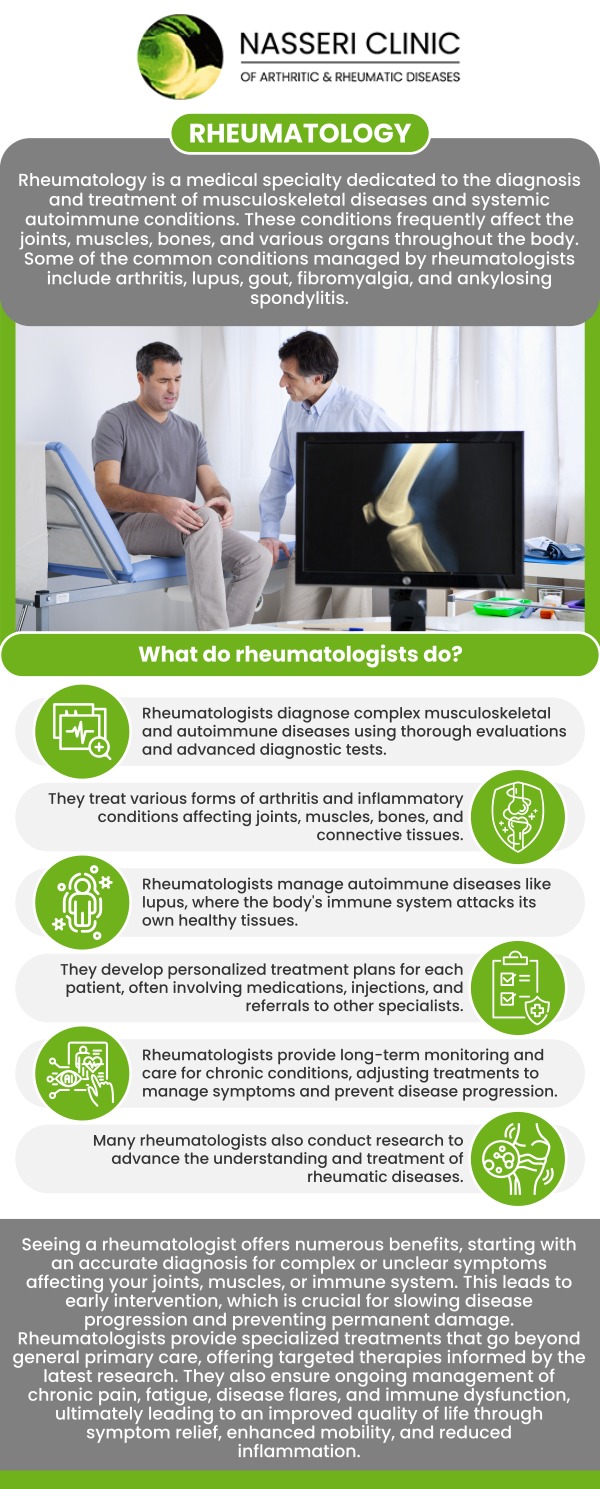
Table of Contents:
What is rheumatology, and what types of conditions does it treat?
When should someone consider seeing a rheumatologist?
What symptoms may indicate a rheumatic or autoimmune disease?
What is the difference between a rheumatologist and an orthopedic doctor?
What happens during a first rheumatology appointment?
What medical history should you bring to a rheumatology consultation?
What tests are commonly used to diagnose rheumatic conditions?
Can rheumatologists treat both arthritis and autoimmune diseases?
What are some of the most common conditions treated by rheumatologists?
How are chronic rheumatic diseases typically managed over time?
Can lifestyle changes help support rheumatology treatment?
How often should patients follow up with a rheumatologist?
Why Trust Nasseri Clinic for Personalized Arthritis and Rheumatic Disease Care?
Rheumatology is a specialized branch of internal medicine focused on diagnosing and treating systemic autoimmune diseases, inflammatory conditions, and complex musculoskeletal disorders. Unlike straightforward wear-and-tear joint problems, the conditions treated in this medical field often involve the immune system mistakenly attacking healthy tissues. This specialty encompasses over a hundred distinct diseases, including rheumatoid arthritis, lupus, gout, scleroderma, and various types of vasculitis. By utilizing targeted, advanced therapies, practitioners aim to reduce inflammation, halt disease progression, and preserve vital joint function over the long term.
You should consider seeking specialized care if you experience persistent joint pain, swelling, severe stiffness, or warmth that lasts for more than a few days, especially if there is no obvious cause like a recent physical injury. Primary care physicians often refer patients to a specialist when routine blood tests show abnormal inflammatory markers or when a patient presents with multiple mysterious symptoms such as unexplained rashes, chronic fatigue, or persistent fevers. Early intervention is critical because delaying treatment can lead to permanent joint damage.
Rheumatic and autoimmune diseases can present in a wide variety of ways, often mimicking other common illnesses. Strong indicators include severe morning stiffness in the joints that lasts for more than an hour, symmetrical joint swelling (affecting the exact same joints on both sides of the body), and persistent muscle aches. Systemic symptoms are also highly prevalent, including profound and unexplainable fatigue, sudden weight loss, low-grade fevers, severe sun sensitivity, dry eyes and mouth, and unusual skin rashes across the face or body.
While both specialties deal with the musculoskeletal system, their primary areas of focus and treatment methods differ significantly. A rheumatology specialist is a medical doctor who uses non-surgical methods, medications, and targeted biologic therapies to treat systemic, inflammatory, and autoimmune diseases affecting the joints, muscles, and bones. In contrast, an orthopedic doctor is a surgeon who specializes in the mechanical and structural issues of the body, such as acute bone fractures, sports injuries, joint replacements, and physical anatomical deformities.
Your initial visit is a comprehensive, investigative process. The physician will conduct an in-depth clinical interview to understand the exact timeline, severity, and specific triggers of your symptoms. This is followed by a meticulous physical examination, paying close attention to every joint for signs of swelling, tenderness, restricted movement, or warmth. The doctor will also look for systemic signs like unusual rashes, nail bed changes, or swollen lymph nodes. Based on these clinical findings, they will formulate a preliminary hypothesis and order specific diagnostic testing.
To make the absolute most of your initial consultation, compile a detailed timeline of when your symptoms first began and how they have evolved over the months or years. Bring a comprehensive list of all medications and dietary supplements you are currently taking, along with their precise dosages. Crucially, you should provide records of any previous treatments, prior lab test results (especially blood work related to inflammation), and imaging reports like X-rays. A thorough family medical history is also vital, as many conditions have genetic links.
Diagnosing these complex, systemic disorders requires a multi-faceted approach. Blood tests are foundational, looking for specific autoantibodies, markers of systemic inflammation, and overall organ function. Imaging modalities are equally important in the diagnostic process. Standard X-rays can reveal structural joint damage or bone erosion, while specialized musculoskeletal ultrasounds and MRI scans are excellent for detecting early soft tissue inflammation and fluid buildup that X-rays might easily miss. Occasionally, joint fluid aspiration or a tissue biopsy may be necessary for a truly definitive diagnosis.
Yes, treating both interconnected issues is the core of this medical specialty. While “arthritis” broadly refers to joint inflammation, there are dozens of distinct types. Specialists treat inflammatory and autoimmune forms of arthritis, such as rheumatoid and psoriatic arthritis, where the immune system directly attacks the joints. Furthermore, they manage broader autoimmune diseases that may affect not just the joints, but the skin, kidneys, lungs, and nervous system, utilizing advanced systemic medications to suppress immune overactivity and protect internal organs.
Among the extensive and diverse list of conditions managed in this field, some of the most frequently encountered include Rheumatoid Arthritis (a chronic inflammatory joint disorder), Osteoarthritis (when associated with complex inflammatory flares), Psoriatic Arthritis, and Ankylosing Spondylitis (which primarily affects the spine). Other highly common diagnoses include Gout (caused by uric acid crystal buildup), Systemic Lupus Erythematosus (a multi-organ autoimmune disease), Scleroderma, Fibromyalgia, and Polymyalgia Rheumatica, an inflammatory disorder causing profound muscle pain and stiffness, predominantly in older adults.
Managing chronic autoimmune and inflammatory disorders requires a dynamic, long-term strategy that is heavily tailored to the individual. The primary goal is achieving clinical remission or very low disease activity. This typically involves Disease-Modifying Antirheumatic Drugs (DMARDs) and advanced biologic therapies that specifically target malfunctioning components of the immune system. Management also includes periodic laboratory monitoring to track disease markers and check for medication side effects, alongside physical therapy. Treatment plans are frequently adjusted based on how the patient’s body responds over time.
Absolutely. While specialized medication is the primary cornerstone for halting internal disease progression, lifestyle modifications play a massive role in overall symptom management and daily quality of life. An anti-inflammatory diet rich in omega-3 fatty acids, antioxidants, and whole foods can actively help reduce internal inflammation. Regular, low-impact exercise, such as swimming or cycling, keeps joints flexible and strengthens supporting muscles. Additionally, prioritizing restorative sleep, practicing stress-reduction techniques, and completely quitting smoking are critical, proven steps in managing these conditions effectively.
The frequency of follow-up visits depends entirely on the specific severity of the condition, the type of medication prescribed, and how well the overall disease is controlled. When first starting a new treatment protocol, or if the disease is currently highly active, you may need to see your doctor every four to six weeks to closely monitor progress and safely adjust dosages. Once the condition is stabilized and clinical remission is achieved, appointments typically spread out to every three to six months for routine maintenance.
When you are facing the complexities of an autoimmune or musculoskeletal condition, you need more than just standard clinical expertise—you need a dedicated partner in your healthcare journey. Our clinic is built on a solid foundation of compassionate, deeply patient-centered care. Dr. Nasseri, MD, and his team take the time to truly listen to your experiences, understanding that no two patients are exactly alike. By combining state-of-the-art diagnostic tools with the latest medical advancements in targeted biologic therapies, we craft highly individualized treatment plans designed to alleviate chronic pain, halt internal disease progression, and fully restore your quality of life. From comprehensive initial evaluations to ongoing, proactive disease management, we are fiercely committed to empowering you with the knowledge, medical resources, and unwavering support necessary to thrive.
Visit Nasseri Clinic for comprehensive, compassionate, and cutting-edge care tailored to your unique needs. If you are struggling with unexplained joint pain, chronic inflammation, or suspect you may be dealing with an underlying autoimmune disorder, do not wait for your symptoms to worsen. Early diagnosis and a customized treatment strategy can make all the difference in your long-term health, joint preservation, and mobility. For more information, contact us or book an appointment online. We are conveniently located at 700 Geipe Rd, Suite 200B, Catonsville, MD 21228. We serve patients from Catonsville MD, Hebbville MD, Woodlawn MD, Arbutus MD, Ellicott City MD, and surrounding areas.
Check Out Our 5 Star Reviews


Additional Services You May Need

Additional Services You May Need
▸ Arthritis Care
▸ Infusion Therapy
▸ Lab Services
▸ Radiology
▸ NCARD NRACE
▸ BioFlex Laser Therapy
▸ Ultrasound Guided Injection
▸ Myer’s Cocktail Infusion
▸ Rheumatology
▸ Myositis
▸ Osteoporosis
▸ Saphnelo Infusion
▸ Injection Treatments
▸ Intravenous Immunoglobulin Therapy
▸ Fibromyalgia
▸ Infusion Therapy for Gout
▸ Inflammatory Eye Disease
▸ Inflammatory Skin Disease
▸ Vasculitis
▸ Lupus
▸ Toradol Injections
▸ Platelet-Rich Plasma (PRP)


 Send Text
 How May I Help You?