

What Does Toradol Do for Pain and Inflammation in Edgewater, MD?
Toradol (ketorolac) is a nonsteroidal anti-inflammatory drug (NSAID) used for short-term relief of moderate to severe pain by reducing chemicals involved in pain and inflammation. It may be considered for acute arthritis flare-ups, joint inflammation, or pain related to certain rheumatic conditions. At Nasseri Clinic of Arthritic & Rheumatic Diseases in Edgewater, MD, Dr. Nasser Nasseri, MD, provides individualized evaluations to determine whether Toradol injections are appropriate based on each patient’s symptoms and medical needs. For more information, contact us or book an appointment online. We are conveniently located at 3168 Braverton St., Suite 330B, Edgewater, MD 21037.
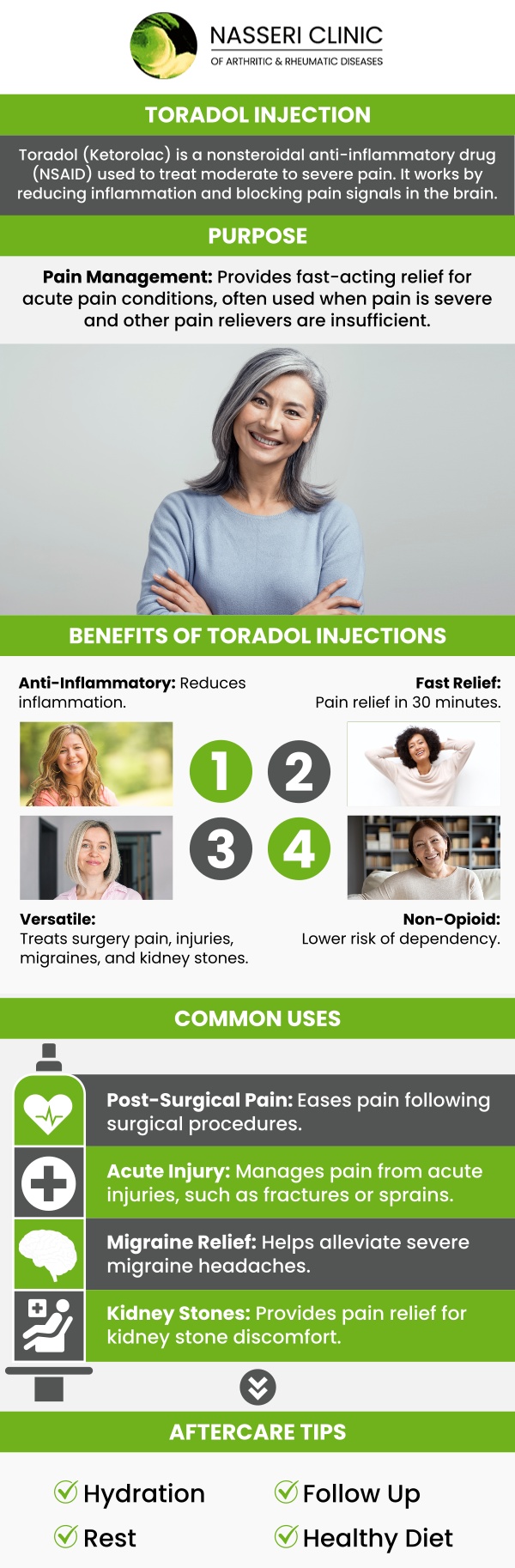
Table of Contents:
How does Toradol help reduce short-term pain and inflammation?
What types of pain may be treated with a Toradol injection?
How quickly can a Toradol injection begin providing pain relief?
How long can the effects of a Toradol injection typically last?
How does Nasseri Clinic of Arthritic and Rheumatic Diseases determine whether Toradol is appropriate for a patient’s pain?
At Nasseri Clinic of Arthritic and Rheumatic Diseases, effective pain management is a crucial part of helping our patients achieve a better quality of life. Toradol, known generically as ketorolac, is one of the nonsteroidal anti-inflammatory drugs (NSAIDs) that we may use to help manage acute pain and inflammation associated with certain rheumatic and arthritic conditions.
Toradol works by blocking the action of substances in the body called prostaglandins, which are released when tissues become inflamed or injured—a common occurrence in many rheumatic diseases such as gout, rheumatoid arthritis, or severe osteoarthritis flares. By inhibiting the cyclooxygenase (COX) enzyme necessary for prostaglandin production, Toradol helps decrease both pain and inflammation at the affected sites. This targeted approach can provide rapid relief for patients experiencing moderate to severe pain, especially during acute flare-ups or following joint procedures.
Unlike treatments aimed at long-term disease control, Toradol is intended for short-term symptom relief—typically used for no more than five days. This limitation is important because prolonged use can increase the risk of side effects, including gastrointestinal bleeding, kidney problems, and cardiovascular complications, especially in patients with chronic rheumatic conditions who may already be at higher risk.
At Nasseri Clinic, our providers carefully evaluate each patient’s needs to determine when short-term use of Toradol is appropriate, often as an alternative to opioid medications for acute pain episodes or post-procedure recovery. Our goal is to help you manage pain safely and effectively as part of your comprehensive rheumatologic care plan.
At the Nasseri Clinic of Arthritic and Rheumatic Diseases, effective pain management is a key component of our comprehensive care for patients with arthritis, autoimmune conditions, and other rheumatic diseases. Toradol is a nonsteroidal anti-inflammatory drug (NSAID) that we may sometimes use as part of our pain management strategies. Administered by injection, Toradol is particularly useful for providing short-term relief of moderate to severe pain, especially when oral medications are not suitable or have proven ineffective.
While Toradol is not used for the ongoing management of chronic pain associated with conditions like rheumatoid arthritis or osteoarthritis, it can be an important option for acute flare-ups, severe joint pain, or after certain procedures, such as joint aspirations or minor interventions. For example, patients who experience sudden, intense pain due to acute inflammation or injury may benefit from a short course of Toradol under close medical supervision.
It’s important to note that Toradol is prescribed for only a short duration—typically no more than a few days—because prolonged use can increase the risk of side effects, especially in people with rheumatic conditions who may have other underlying health concerns. Our healthcare team carefully evaluates each patient’s overall health, pain severity, and specific diagnosis before recommending Toradol or any pain management therapy.
At Nasseri Clinic of Arthritic and Rheumatic Diseases, effective pain management is an essential part of our comprehensive care for patients with arthritis and other rheumatic disorders. Toradol (ketorolac tromethamine) is a nonsteroidal anti-inflammatory drug (NSAID) that we may use in select cases to address moderate to severe pain, particularly when rapid relief is needed due to acute flare-ups or after certain procedures.
When administered as an intramuscular (IM) or intravenous (IV) injection, Toradol typically begins to relieve pain within 30 minutes. Many patients notice improvement as soon as 10 to 15 minutes after an IV injection, with peak effects usually reached within one to two hours. The onset and duration of pain relief can vary based on individual factors such as your metabolism, the severity of your pain, and the specific route of administration.
Because Toradol is intended for short-term use, our healthcare team will carefully determine the appropriate dosage and method of administration for each patient, taking into consideration your overall health, kidney function, and any other medications you may be taking. If you continue to experience pain or develop new symptoms after receiving a Toradol injection, it is important to notify our clinic promptly so we can reassess your treatment plan.
At Nasseri Clinic of Arthritic and Rheumatic Diseases, we understand that managing pain from arthritis and other rheumatic conditions is a top priority for our patients. Toradol (ketorolac) is a nonsteroidal anti-inflammatory drug (NSAID) that is sometimes used in our clinic for the short-term relief of moderate to severe pain related to inflammatory or musculoskeletal flare-ups.
When administered by intramuscular or intravenous injection, Toradol typically begins to provide pain relief within 30 to 60 minutes. Most patients experience significant relief for about 4 to 6 hours, although some may feel its effects for up to 8 hours. The exact duration can vary based on individual factors such as age, kidney function, weight, and overall health.
Because Toradol can increase the risk of kidney or gastrointestinal side effects, especially in patients with chronic rheumatic diseases, we use it judiciously and usually do not recommend its use for more than five days in a row. If you have questions about how Toradol fits into your arthritis or rheumatologic treatment plan, or if you are concerned about its effectiveness, please speak with your provider at Nasseri Clinic. We are dedicated to creating a safe and effective pain management strategy tailored to your needs.
At the Nasseri Clinic of Arthritic and Rheumatic Diseases, our approach to pain management is centered on the unique needs of individuals living with arthritis, autoimmune, and other rheumatic conditions. When considering medications such as Toradol (ketorolac), Dr. Nasseri, MD, and our team of rheumatology specialists conducts a thorough and personalized assessment to determine if this treatment aligns with the patient’s clinical profile and specific rheumatic diagnosis.
Our process begins with an in-depth evaluation of the patient’s medical history, including all current and prior rheumatologic diagnoses such as rheumatoid arthritis, gout, lupus, or osteoarthritis. We carefully assess the nature of the pain—distinguishing between inflammatory flares, acute musculoskeletal injuries, or postoperative pain related to joint procedures, all of which are common scenarios in our practice.
Given that Toradol is a potent NSAID, our clinicians at Nasseri Clinic are vigilant about identifying risk factors particularly relevant to patients with chronic rheumatic diseases. We screen for gastrointestinal complications (such as a history of ulcers or bleeding), kidney function—often a concern in patients with systemic autoimmune conditions—as well as cardiovascular health, and any history of NSAID allergies. We also take into account medications commonly used in rheumatology, such as corticosteroids, anticoagulants, or disease-modifying antirheumatic drugs (DMARDs), which might interact with Toradol or increase the risk of side effects. For our elderly patients or those who are pregnant or breastfeeding, we exercise additional caution given their increased vulnerability.
Patient education is a cornerstone of care at the Nasseri Clinic. We ensure that patients fully understand the intended benefits, possible risks, and warning signs that require prompt medical attention. Our holistic, patient-centered strategy strives to balance effective pain relief with the safety considerations unique to those living with arthritis and related rheumatic conditions, ensuring that every medication, including Toradol, is used judiciously and thoughtfully. For more information, contact us or book an appointment online. We are conveniently located at 3168 Braverton St., Suite 330B, Edgewater, MD 21037. We serve patients from Edgewater MD, Riva MD, Davidsonville MD, Annapolis MD, and surrounding areas.
Check Out Our 5 Star Reviews


Additional Services You May Need

Additional Services You May Need
▸ Arthritis Care
▸ Infusion Therapy
▸ Lab Services
▸ Radiology
▸ NCARD NRACE
▸ BioFlex Laser Therapy
▸ Ultrasound Guided Injection
▸ Myer’s Cocktail Infusion
▸ Rheumatology
▸ Myositis
▸ Osteoporosis
▸ Saphnelo Infusion
▸ Injection Treatments
▸ Intravenous Immunoglobulin Therapy
▸ Fibromyalgia
▸ Infusion Therapy for Gout
▸ Inflammatory Eye Disease
▸ Inflammatory Skin Disease
▸ Vasculitis
▸ Lupus
▸ Toradol Injections
▸ Platelet-Rich Plasma (PRP)


 Send Text
 How May I Help You?