

Osteoporosis Prevention and Management in Columbia MD – Tailored Treatments for Your Needs
Proactively addressing bone density loss is essential for preserving physical independence and avoiding life-altering skeletal fractures as we age. At Nasseri Clinic, the medical approach to osteoporosis combines early diagnostic screenings with state-of-the-art preventative and therapeutic strategies. Led by Dr. Nasser Nasseri, MD, a highly regarded, board-certified rheumatologist, the clinic provides the targeted intervention necessary to manage progressive bone thinning. For more information, contact us or book an appointment online. We are conveniently located at 5500 Knoll North Dr, Suite 250B, Columbia, MD 21045.
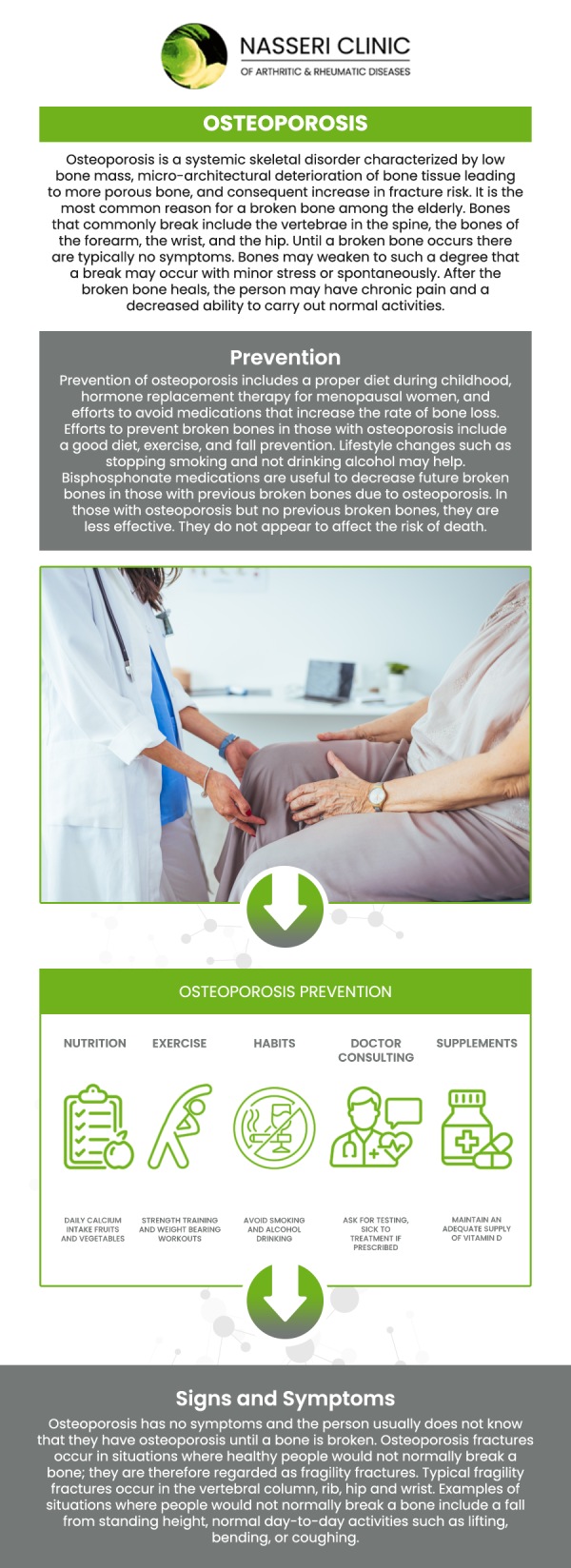
Table of Contents:
How do I know if I have osteoporosis?
What are the risk factors for osteoporosis?
Can a rheumatologist help with osteoporosis prevention?
What specialized treatments for osteoporosis are offered by rheumatologists?
How Can Dr. Nasser Nasseri Help You Rebuild and Protect Your Bone Strength?
Osteoporosis is frequently referred to as a “silent disease” because bone loss typically occurs gradually without any conspicuous outward symptoms or physical discomfort. Many individuals remain entirely unaware that their skeletal strength is compromised until a minor fall, bump, or sudden strain results in a painful bone fracture.
However, there are subtle physical indicators that can point toward progressing bone thinning. These include a gradual loss of height over time, a noticeable change in posture such as a stooped or hunched upper spine (kyphosis), or sudden, unexplained back pain, which can be caused by a collapsed or fractured vertebra.
The definitive diagnostic method to determine if you have this condition before a fracture occurs is a Dual-Energy X-ray Absorptiometry (DEXA) scan. This non-invasive, low-dose imaging test measures the precise mineral density of bones in key areas like the hip and spine, comparing the data against established biological benchmarks to provide a clear, numerical T-score.
A variety of genetic, demographic, and lifestyle variables can influence your probability of developing diminished bone density. Understanding these risk factors is crucial for implementing timely preventative measures.
• Age and Gender: Biological aging naturally accelerates bone resorption, and women face a significantly higher risk due to the rapid drop in protective estrogen levels during menopause.
• Family History: A history of fragile bones or hip fractures within your immediate family strongly suggests a genetic predisposition to lower peak bone mass.
• Body Frame Size: Individuals with exceptionally small or thin body frames possess less overall bone mass to draw from as they age.
• Nutritional Deficiencies: Diets persistently low in calcium and Vitamin D hinder the body’s natural bone-rebuilding cycles.
• Lifestyle Choices: Chronic physical inactivity, prolonged tobacco use, and excessive alcohol consumption directly degrade bone architecture.
• Medical Conditions and Medications: Underlying disorders like rheumatoid arthritis, hyperthyroidism, and digestive malabsorption issues increase vulnerability. Additionally, the long-term use of corticosteroid medications (such as prednisone) can interfere with bone reconstruction.
Yes, a rheumatologist is uniquely qualified to spearhead an effective, comprehensive osteoporosis prevention program. Because rheumatologists specialize in complex musculoskeletal and systemic inflammatory diseases, they understand the underlying biochemical pathways that regulate bone remodeling and mineral density.
When you consult a rheumatologist for prevention, they look beyond basic lifestyle tips to conduct an in-depth metabolic risk assessment. They evaluate your family history, analyze blood work to check calcium and vitamin levels, and review current medications to identify compounds that accelerate bone loss.
Furthermore, because chronic inflammatory diseases—such as rheumatoid arthritis or lupus—directly stimulate bone breakdown, a rheumatologist can precisely manage your systemic inflammation to protect your skeletal integrity from inflammatory bone degradation.
When routine dietary adjustments and over-the-counter supplements are insufficient to control progressive bone loss, rheumatologists offer a sophisticated range of targeted medical therapies designed to alter the course of the disease.
These specialized interventions include:
• Antiresorptive Medications: Advanced pharmacological treatments, including oral or intravenous bisphosphonates and targeted monoclonal antibodies, work to slow down the action of osteoclasts (the cells responsible for breaking down bone tissue), effectively preserving existing bone mass.
• Anabolic Agents: For severe bone thinning or patients with a history of recurrent fractures, rheumatologists utilize bone-building parathyroid hormone analogues. These therapies stimulate osteoblasts to actively construct new bone tissue and rapidly restore skeletal architecture.
• Hormone-Related Therapies: Selective estrogen receptor modulators (SERMs) may be utilized to mimic the bone-protective effects of estrogen in postmenopausal individuals.
• Infusion Services: Specialized, highly regulated intravenous medication infusions can be administered on-site, providing long-acting therapeutic coverage for individuals who cannot tolerate oral medications due to gastrointestinal issues.
Effectively treating progressive bone density depletion requires a highly structured, medically supervised strategy that is precisely calibrated to your body’s unique metabolic profile. Under the clinical leadership of Dr. Nasser Nasseri, MD, the practice offers an exceptional level of specialized diagnostic tracking and personalized treatment care for osteoporosis and osteopenia. Dr. Nasseri and his expert team merge extensive clinical insights with cutting-edge medical technologies, using precise bone-density assessments to determine your exact fracture risk profile. From prescribing highly advanced bone-building anabolic medications to administering specialized on-site infusion therapies, the clinical treatments are carefully selected to stabilize your bone matrix, halt progressive thinning, and significantly improve your long-term physical durability.
Protecting your skeletal health and preserving your long-term physical mobility requires a proactive, specialist-guided approach to bone density management. Visit Nasseri Clinic for comprehensive osteoporosis screenings, expert preventative guidance, and advanced, customized treatment plans designed to keep your bones strong and resilient for years to come. For more information, contact us or book an appointment online. We are conveniently located at 5500 Knoll North Dr, Suite 250B, Columbia, MD 21045. We serve patients from Columbia MD, Ellicott City MD, Laurel MD, Clarksville MD, Fulton MD, and surrounding areas.
Check Out Our 5 Star Reviews


Additional Services You May Need

Additional Services You May Need
▸ Arthritis Care
▸ Infusion Therapy
▸ Lab Services
▸ Radiology
▸ NCARD NRACE
▸ BioFlex Laser Therapy
▸ Ultrasound Guided Injection
▸ Myer’s Cocktail Infusion
▸ Rheumatology
▸ Myositis
▸ Osteoporosis
▸ Saphnelo Infusion
▸ Injection Treatments
▸ Intravenous Immunoglobulin Therapy
▸ Fibromyalgia
▸ Infusion Therapy for Gout
▸ Inflammatory Eye Disease
▸ Inflammatory Skin Disease
▸ Vasculitis
▸ Lupus
▸ Toradol Injections
▸ Platelet-Rich Plasma (PRP)


 Send Text
 How May I Help You?