

Toradol Injections for Joint Pain and Arthritis Relief in Rosedale, MD
Living with severe joint pain and arthritis can disrupt your daily routine, but fast-acting treatments are available to help you regain your mobility and comfort. At the Nasseri Clinic of Arthritic & Rheumatic Diseases in Rosedale, MD, Dr. Nasser Nasseri, MD and his compassionate rheumatology team offer Toradol injections as a powerful, non-narcotic solution for acute pain flares. Because Toradol is a potent anti-inflammatory medication, it works quickly to reduce the severe swelling and inflammation associated with arthritic conditions. For more information, contact us or visit us online to book an appointment! We are located at 9114 Philadelphia Rd, Ste 208, Rosedale MD 21237.
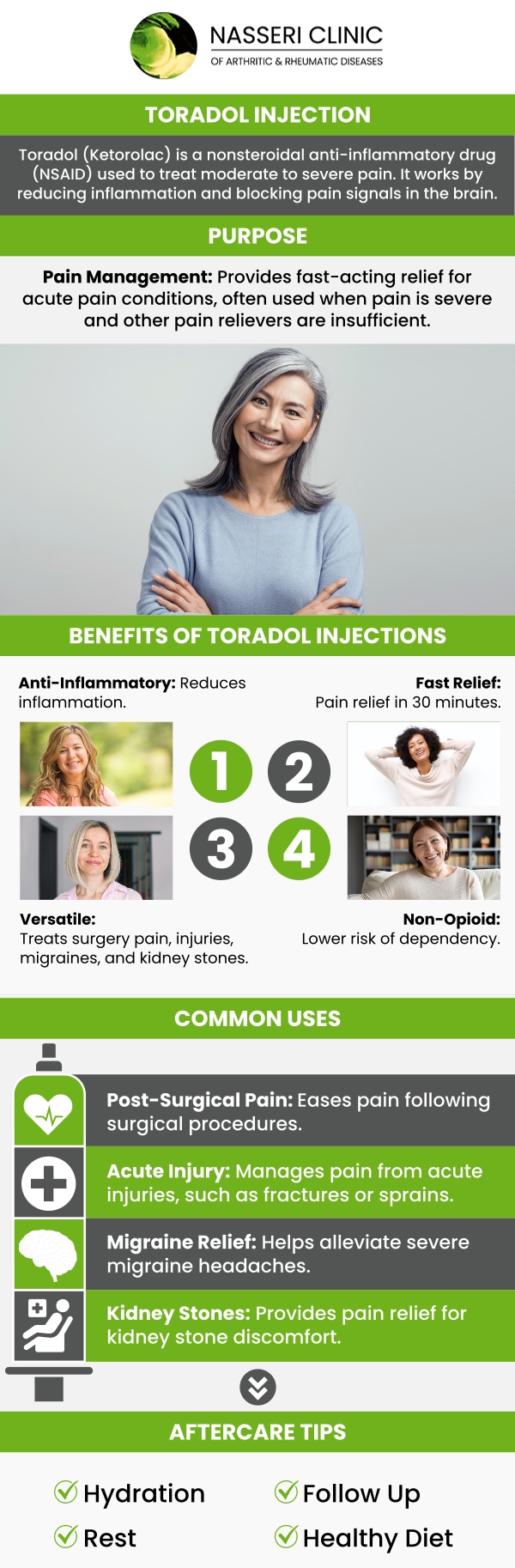
Table of Contents:
How can Toradol injections provide short-term relief from arthritis-related joint pain?
Which joint symptoms may lead to consideration of a Toradol injection?
How long can pain relief from a Toradol injection typically last?
Can Toradol injections help with both pain and inflammation in affected joints?
What safety considerations are important before receiving Toradol injections?
How does Dr. Nasser Nasseri, MD, personalize Toradol injection care for patients with joint pain and arthritis?
At Nasseri Clinic of Arthritic and Rheumatic Diseases, our team is dedicated to providing effective pain relief options for patients suffering from arthritis and other rheumatic conditions. One of the treatments we may utilize for managing moderate to severe pain is Toradol (ketorolac) injections, a type of nonsteroidal anti-inflammatory drug (NSAID).
Toradol injections are particularly useful for patients experiencing acute flare-ups of arthritis, where rapid pain relief is essential. When administered by our experienced medical staff, Toradol works quickly to reduce inflammation by blocking the production of prostaglandins—substances in the body that contribute to joint pain, swelling, and stiffness.
For those with arthritis, joint inflammation can significantly impact daily life. By targeting the enzymes responsible for inflammation, Toradol injections can offer fast-acting relief, often within an hour, restoring mobility and comfort during severe pain episodes. This makes Toradol an important option for immediate symptom management, especially when other pain relief measures are not sufficient.
It is important to note that Toradol injections are intended for short-term use only, usually for a few days, because of potential side effects such as gastrointestinal irritation, kidney issues, and cardiovascular risks. At Nasseri Clinic, we carefully evaluate each patient’s medical history and current condition to determine if Toradol is the most appropriate intervention. While Toradol can rapidly address pain and inflammation, it does not treat the underlying causes of arthritis or provide long-term control of the disease.
At Nasseri Clinic of Arthritic and Rheumatic Diseases, we are committed to providing effective relief for patients experiencing acute joint pain due to various arthritic and rheumatic conditions. Toradol (ketorolac) is one of the nonsteroidal anti-inflammatory drugs (NSAIDs) that our clinicians may use as an injectable option for short-term management of moderate to severe joint pain.
Patients who present with significant joint pain—particularly when it interferes with daily activities—may benefit from a Toradol injection, especially if oral medications have not provided sufficient relief or if rapid pain control is needed. Common scenarios include:
• Severe flare-ups of rheumatoid arthritis
• Acute gout attacks
• Painful exacerbations of osteoarthritis
• Intense joint pain following an injury or after orthopedic procedures
These conditions are often accompanied by symptoms such as swelling, warmth, and decreased range of motion in the affected joints. In these situations, Toradol can offer prompt relief from pain and inflammation, allowing patients to regain function and comfort more quickly.
Toradol is commonly administered as an injection, either intramuscularly or intravenously, and typically begins to work within 30 minutes. The pain relief from a single Toradol injection generally lasts 4 to 6 hours, though some patients may experience relief for up to 8 hours depending on factors such as their metabolism, the nature of their rheumatic condition, and their individual response to the medication.
At our clinic, we carefully consider the use of Toradol, as it is intended only for short-term use—usually not exceeding five days—due to potential risks, including gastrointestinal bleeding and kidney effects, which can be especially relevant for those with chronic rheumatic diseases. Our experienced team will assess whether Toradol or another pain management approach is most appropriate for your specific needs and medical history.
At Nasseri Clinic of Arthritic and Rheumatic Diseases, we utilize a variety of advanced therapies to help our patients manage pain and inflammation associated with arthritis and other rheumatic conditions. One option that may be considered for short-term pain relief is Toradol (ketorolac), a nonsteroidal anti-inflammatory drug (NSAID).
Administered as an injection, Toradol works by blocking the production of prostaglandins—substances in the body that contribute to pain and inflammation in the joints.
For patients experiencing acute flare-ups of arthritis, gout, or other painful rheumatic conditions, Toradol injections can provide effective, temporary relief to help restore mobility and comfort. However, due to potential side effects, Toradol is typically used for a limited duration and is not intended for long-term management.
At Nasseri Clinic, our experienced physicians carefully evaluate each patient’s medical history and current symptoms to determine if Toradol or another pain management strategy is best suited to their needs. We are committed to providing safe and personalized care, and we encourage patients to discuss all available options, including the potential risks and benefits of NSAID therapy.
Toradol (ketorolac) injections may occasionally be recommended for short-term management of moderate to severe pain, particularly when rapid relief is required and other options are not suitable or effective. However, because many of our patients have complex medical histories related to arthritis, autoimmune, and rheumatic diseases, several important safety considerations must be taken into account before receiving a Toradol injection.
Key Considerations for Patients with Arthritis and Rheumatic Disease:
• Allergies and Sensitivities: Please inform your Nasseri Clinic provider if you have ever had an allergic reaction to ketorolac, aspirin, other NSAIDs (such as ibuprofen or naproxen), or any components of the injection. Allergic individuals should not receive Toradol, and this is especially important for rheumatology patients, who may be more prone to medication sensitivities.
• History of Asthma or Nasal Polyps: Patients with rheumatic or autoimmune diseases sometimes have associated asthma or nasal polyps, which can increase the risk of a severe reaction to NSAIDs like Toradol.
• Gastrointestinal Risks: Many patients with arthritis or who take chronic anti-inflammatory medications are at increased risk for stomach ulcers or gastrointestinal bleeding. Toradol can increase this risk, especially in those with a history of GI problems, recent bleeding, or peptic ulcer disease.
• Kidney Function: Rheumatic diseases and their treatments can sometimes affect kidney function. Toradol is not suitable for patients with advanced kidney disease or dehydration, as it can further impair kidney health.
• Heart and Blood Vessel Health: Chronic inflammatory diseases can increase cardiovascular risk. Toradol, like other NSAIDs, may slightly increase the risk of heart attack or stroke, so it should be used with caution in patients with a history of heart disease, stroke, or high blood pressure.
• Pregnancy and Breastfeeding: Toradol should not be used during the third trimester of pregnancy due to possible risks to the fetus and complications during delivery. If you are pregnant, planning to become pregnant, or breastfeeding, let your provider know.
• Drug Interactions: Many patients at Nasseri Clinic are on multiple medications, including blood thinners, corticosteroids, other NSAIDs, or drugs for autoimmune disease. These can interact with Toradol, increasing the risk of bleeding or other side effects. Please provide a complete list of all your medications, including over-the-counter and herbal products.
• Short-Term Use Only: Toradol is only intended for short-term use (typically not more than five days) because of its potential for serious side effects, especially in patients with chronic rheumatic diseases. Elderly patients or those with lower body weight may require lower doses.
At the Nasseri Clinic of Arthritic and Rheumatic Diseases, Dr. Nasser Nasseri, MD, offers personalized care for patients struggling with joint pain and arthritis. As part of the clinic’s comprehensive approach to rheumatologic conditions, Dr. Nasseri carefully evaluates whether Toradol (ketorolac) injections are an appropriate treatment option for each individual.
Dr. Nasseri begins by conducting a thorough assessment of every patient’s medical history, current medications, severity of symptoms, and any underlying health concerns. This detailed evaluation is essential at the Nasseri Clinic, where safety and patient well-being come first—especially since Toradol, a potent nonsteroidal anti-inflammatory drug (NSAID), may not be suitable for those with kidney issues, gastrointestinal problems, or a history of NSAID allergies.
If Toradol is determined to be both safe and beneficial, Dr. Nasseri customizes the dosage and frequency of injections based on the patient’s specific needs, always following strict, short-term use guidelines to minimize the risk of side effects. At the Nasseri Clinic, Dr. Nasseri often schedules Toradol injections to coincide with arthritis flare-ups or periods of increased joint pain, ensuring timely and effective relief. He also closely monitors each patient’s response, making adjustments as needed for optimal outcomes.
Importantly, Toradol injections at the Nasseri Clinic are integrated into a broader, multidisciplinary arthritis and pain management plan. Dr. Nasseri may suggest combining Toradol with physical therapy, lifestyle changes, or other medications to provide comprehensive and lasting relief. The clinic is committed to patient education, so Dr. Nasseri ensures that each patient fully understands the benefits and potential risks of Toradol, provides clear post-injection instructions, and arranges regular follow-ups to monitor progress and address any concerns.
By combining advanced rheumatologic expertise, individualized treatment plans, and attentive follow-up, the Nasseri Clinic of Arthritic and Rheumatic Diseases ensures that every patient receives the safest and most effective care possible for their joint pain and arthritis. For more information, contact us or visit us online to book an appointment! We are located at 9114 Philadelphia Rd, Ste 208, Rosedale MD 21237. We serve patients from Rosedale MD, Parkville MD, Middle River MD, Rossville MD, Overlea MD, and surrounding areas.
Check Out Our 5 Star Reviews


Additional Services You May Need

Additional Services You May Need
▸ Arthritis Care
▸ Infusion Therapy
▸ Lab Services
▸ Radiology
▸ NCARD NRACE
▸ BioFlex Laser Therapy
▸ Ultrasound Guided Injection
▸ Myer’s Cocktail Infusion
▸ Rheumatology
▸ Myositis
▸ Osteoporosis
▸ Saphnelo Infusion
▸ Injection Treatments
▸ Intravenous Immunoglobulin Therapy
▸ Fibromyalgia
▸ Infusion Therapy for Gout
▸ Inflammatory Eye Disease
▸ Inflammatory Skin Disease
▸ Vasculitis
▸ Lupus
▸ Toradol Injections
▸ Platelet-Rich Plasma (PRP)


 Send Text
 How May I Help You?