

How Long Does Relief From a Toradol Injection Last?
Toradol injections can be an effective tool for managing acute pain in patients with arthritis and rheumatic diseases seen by Dr. Nasseri at Nasseri Clinic. However, the degree and duration of relief are influenced by the severity of pain and the underlying condition. Under Dr. Nasseri’s guidance, our individualized approach ensures that each patient receives the most appropriate and effective care for their pain management needs. For more information, contact us or visit us online to book an appointment! We are located at 9114 Philadelphia Rd, Ste 208, Rosedale MD 21237.
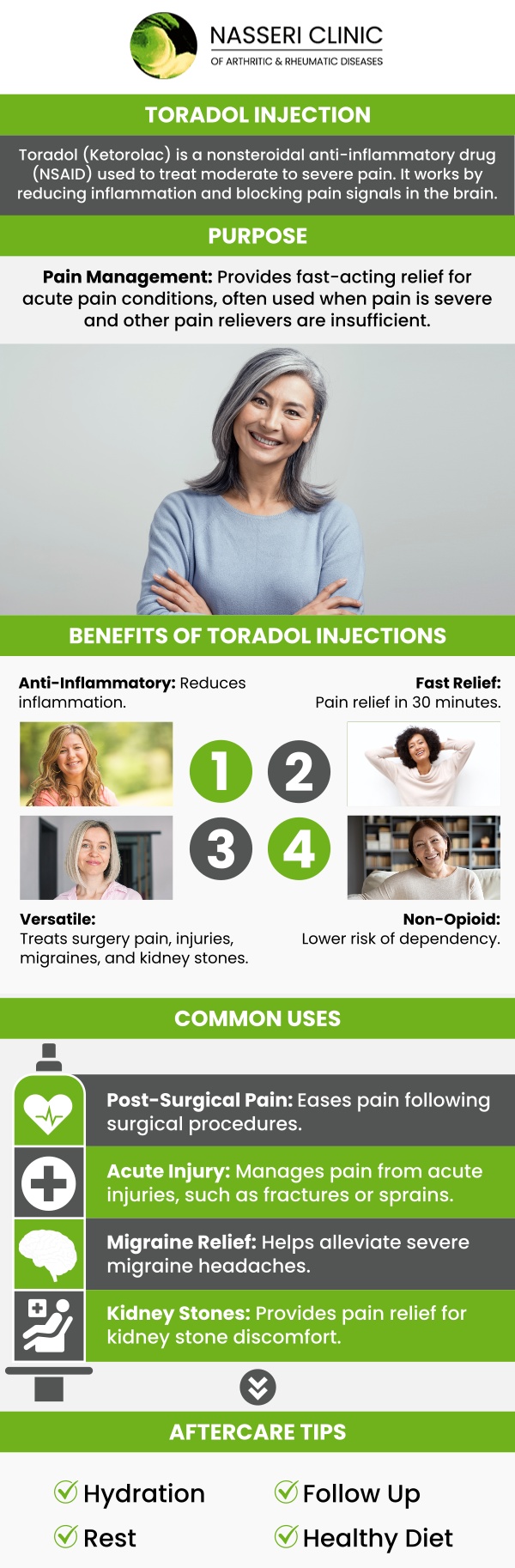
Table of Contents:
How does the severity of pain impact Toradol injection effectiveness length?
What factors affect how long a Toradol injection provides relief?
Is the duration of Toradol injection relief different for each patient?
Does Toradol injection relief last longer than oral pain medications?
Learning How Long Toradol Injection Benefits Last With Dr. Nasser Nasseri, MD
At Nasseri Clinic of Arthritic and Rheumatic Diseases, many of our patients suffer from acute or chronic musculoskeletal pain due to arthritis, autoimmune disorders, or other rheumatic conditions. One medication commonly used in our practice to manage moderate to severe pain and inflammation is Toradol (ketorolac), a nonsteroidal anti-inflammatory drug (NSAID) administered via injection.
Toradol works by blocking prostaglandins—chemicals in the body that play a key role in inflammation and pain. In patients with arthritic and rheumatic diseases, where inflammation is often a major contributor to discomfort, Toradol can provide effective, short-term relief.
Effectiveness and Duration Depend on Pain Severity
• Mild to Moderate Flares: For patients experiencing mild to moderate arthritic or rheumatic pain flares, a standard dose of Toradol injection typically provides significant relief lasting about four to six hours. This can be particularly helpful for acute episodes, such as sudden gout attacks, bursitis, or flare-ups of osteoarthritis or rheumatoid arthritis.
• Severe Pain Episodes: For patients with severe pain such as those experiencing aggressive inflammatory flares or advanced disease—the perceived duration of relief from Toradol may be shorter. Although the medication’s action and metabolism are consistent, intense pain may “break through” before the next dose is due, making it feel like the effect is wearing off sooner.
Because the underlying disease process in arthritic and rheumatic conditions can be complex, our healthcare providers carefully assess the severity and nature of each patient’s pain before recommending Toradol injections. For mild to moderate pain, Toradol alone may be sufficient. In cases of severe or persistent pain, we may supplement with additional pain management strategies, such as other medications, disease-modifying therapies, or targeted joint injections.
We understand that pain is subjective and varies from person to person, especially in chronic rheumatic diseases. Our team monitors each patient’s response to Toradol, adjusting the treatment plan as necessary to ensure both safety and optimal comfort.
The duration of pain relief following a Toradol injection can vary based on several factors relevant to patients with arthritic and rheumatic conditions:
• Metabolism and Health Status: Each patient’s body processes medications differently. Individuals with faster metabolisms may experience shorter-lasting effects, while those with slower metabolisms often seen in chronic rheumatic diseases may have prolonged relief. Additionally, patients with compromised kidney or liver function, which can sometimes accompany chronic rheumatologic conditions, may notice the medication lasts longer or may be at higher risk for side effects.
• Type and Severity of Pain: The nature of your pain whether it is due to an acute flare of arthritis, chronic joint discomfort, or inflammation will influence how long Toradol is effective. Severe inflammatory pain may require additional pain management strategies alongside Toradol.
• Dosage and Administration: At Nasseri Clinic, your provider will determine the appropriate dose and method of administration (intramuscular vs. intravenous) based on your specific rheumatic condition and overall health. Intravenous injections may offer faster, but sometimes shorter, relief than intramuscular injections.
• Individual Response: People with rheumatic and arthritic diseases may respond differently to NSAIDs like Toradol. Factors such as age, body weight, other medications, and co-existing medical conditions can all influence the duration and effectiveness of pain relief.
• Co-existing Treatments: Many patients at our clinic take multiple medications for autoimmune or inflammatory conditions. Interactions with other drugs can affect how long Toradol remains active in your system.
At Nasseri Clinic, your safety and comfort are our priorities. Always follow the guidance of your rheumatology care team when receiving Toradol or any pain management injections. If you notice any unexpected side effects or if your pain is not well controlled, contact your provider promptly so your treatment plan can be adjusted to best meet your needs.
At the Nasseri Clinic of Arthritic and Rheumatic Diseases, Toradol (ketorolac) injections are sometimes used as part of a comprehensive pain management plan for patients with conditions such as arthritis and other rheumatic diseases. The duration of pain relief from a Toradol injection can vary from one individual to another, depending on several important factors—including the type and severity of the rheumatic condition being treated, the patient’s age, kidney and liver function, and any other medications they may be taking.
For most patients at our clinic, a single Toradol injection typically provides relief from joint or muscle pain for approximately 4 to 6 hours. However, some individuals may experience either shorter or longer-lasting effects, depending on their unique health profile and the underlying cause of their pain.
Because patients with arthritic and rheumatic diseases often experience fluctuating symptoms, it is crucial to follow the dosing recommendations provided by your Nasseri Clinic healthcare provider. If you find that your pain returns sooner than expected or does not improve as anticipated, please inform our medical team promptly. This will allow us to adjust your treatment plan and ensure the most effective and safe pain management tailored to your needs.
When Toradol is administered by injection, it provides rapid pain relief—often within 30 minutes—which can be especially helpful during acute flare-ups of arthritis or in situations where oral medications are not suitable, such as when patients have gastrointestinal issues or need fast-acting pain control. The effects of the injection typically last about 4 to 6 hours.
Oral NSAIDs, including oral ketorolac and medications like ibuprofen, are also commonly used in rheumatology. These oral options take longer to start working because they are absorbed through the digestive tract, but they offer a similar duration of relief (about 4 to 6 hours). Oral forms may sometimes provide a slightly longer effect, depending on the specific medication and formulation.
At Nasseri Clinic, our team carefully considers your medical history, current symptoms, and unique needs when recommending pain management strategies.
Injectable Toradol is particularly useful for:
• Rapid relief during severe arthritis flare-ups
• Patients who cannot tolerate oral medications
• Situations where immediate pain control is necessary (e.g., in-office procedures)
Both injectable and oral forms of Toradol are meant for short-term use due to potential side effects, especially with prolonged or repeated dosing.
While Toradol injections work faster, they do not provide longer-lasting pain relief compared to oral options. The choice between injectable and oral NSAIDs is always individualized for each patient in our clinic, balancing the need for rapid relief, safety considerations, and your personal preferences.
Toradol (generic name: ketorolac) is a nonsteroidal anti-inflammatory drug (NSAID) frequently used in our practice to address acute pain—such as severe flare-ups of arthritis, sudden joint inflammation, or pain following certain procedures. Dr. Nasseri explains that Toradol is not a long-term solution, but its rapid action makes it valuable in quickly reducing moderate to severe pain that sometimes affects patients with rheumatic diseases.
Dr. Nasseri emphasizes that, due to potential side effects such as gastrointestinal irritation, kidney function changes, and cardiovascular risks, Toradol injections are only used for short-term pain control—typically for no more than five days. This is especially important in patients with chronic rheumatic conditions who may already be at risk for these complications. Toradol is not recommended for long-term management of chronic pain, nor is it suitable for individuals with certain underlying medical issues.
If you’re living with arthritis or a rheumatic disease and want to know if Toradol is right for you, or you have concerns about your current pain management plan, please schedule a consultation with Dr. Nasseri at the Nasseri Clinic of Arthritic and Rheumatic Diseases. For more information, contact us! We are located at 9114 Philadelphia Rd, Ste 208, Rosedale MD 21237. We serve patients from Rosedale MD, Parkville MD, Middle River MD, Rossville MD, Overlea MD, and surrounding areas.
Check Out Our 5 Star Reviews


Additional Services You May Need

Additional Services You May Need
▸ Arthritis Care
▸ Infusion Therapy
▸ Lab Services
▸ Radiology
▸ NCARD NRACE
▸ BioFlex Laser Therapy
▸ Ultrasound Guided Injection
▸ Myer’s Cocktail Infusion
▸ Rheumatology
▸ Myositis
▸ Osteoporosis
▸ Saphnelo Infusion
▸ Injection Treatments
▸ Intravenous Immunoglobulin Therapy
▸ Fibromyalgia
▸ Infusion Therapy for Gout
▸ Inflammatory Eye Disease
▸ Inflammatory Skin Disease
▸ Vasculitis
▸ Lupus
▸ Toradol Injections
▸ Platelet-Rich Plasma (PRP)


 Send Text
 How May I Help You?